


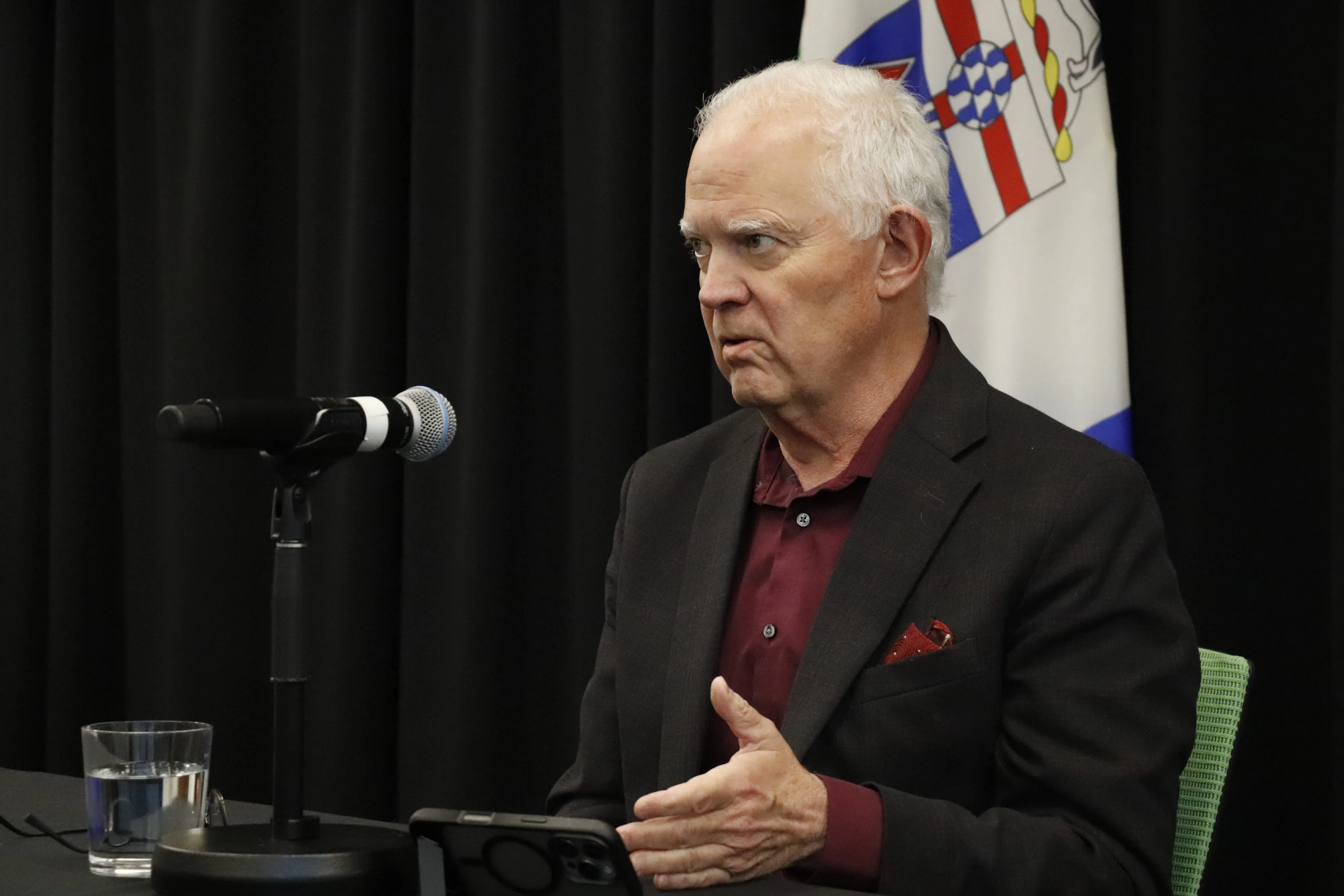
Mark E. Smith, P.E., P.Eng. is one of the authors of the report highlighting the causes of the heap leech failure at the Eagle Gold Mine. Photo Courtesy of Macklen Linke/CKRW.
Whitehorse, YT – The catastrophic collapse at Victoria Gold’s Eagle Mine last June was caused by unstable, waterlogged ore and faulty drainage, according to a new independent report.
Engineers Mark Smith and Jean-Marie Conrad, who led the review, found that weak, clay-rich ore stacked in 2020, combined with heavy spring irrigation and clogged drainage pipes, triggered a liquefaction event — a sudden loss of strength in saturated material.
On June 24, 2024, more than two million tonnes of cyanide-laced ore spilled into the environment.
The review found mine operators had stacked ore containing up to 76 per cent clay-rich “shear zone” material — weak and with low permeability. Smith says poor drainage design and blocked pipes allowed water to pool deep inside the heap leach pad, undermining slope stability.
“It started in April with irrigation, it took about two months for the local inter ramp failure to happen,” said Smith. “Since the inter ramp failure started, it took 10 seconds for the first ton of ore across the top of the dam.”
The site lacked basic monitoring systems, the report said. Smith adds that deteriorating conditions on the heap leach could have been detected if surveillance were in place.
“Sometime in that two-month period… There would have been measurable deformation that I would like to think would raise a red flag, and somebody would look deeper.”
The report includes 50 recommendations aimed at preventing future failures, including mandatory independent technical review boards, stronger design standards, improved site surveillance, and a full update of Yukon’s mine waste guidelines.
The Yukon Government says it is reviewing the findings and will announce next steps in the coming weeks.


