


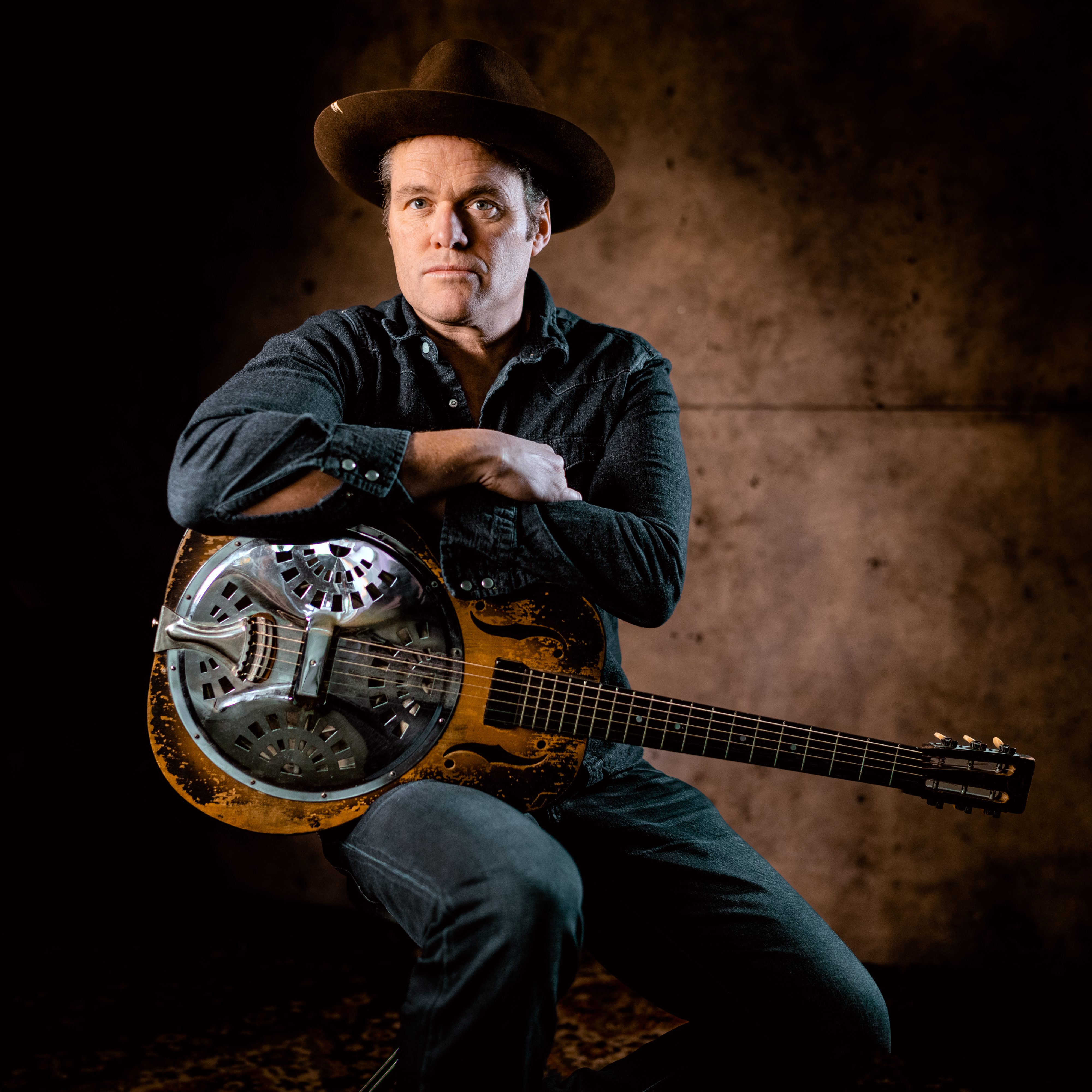
Photo supplied by KPEP Management
Gordie Tentrees wanted to make a record that captured what happened when musicians played together in a room. Bumps, bruises and all.
The Yukon songwriter says he carried that idea for a decade before making Dandelion Blue. Recorded with Jimmy Bowskill and Steve Marriner in an Ontario farmhouse, the album took shape through sessions that sent Tentrees back to Whitehorse with a new sense of possibility, and a need to write more songs.
Ahead of his November 3rd double record release show with Cam Penner at Lefty’s Well, Tentrees spoke with CKRW about the recording process, finding inspiration in Old Crow and writing a love song from a moose’s perspective.
You described this as a record you’ve been imagining for 10 years. What were you envisioning?
I had this idea of making a live-off-the-floor record with some great musicians that could do that. Just pressing play and doing one or two takes and going, “Well, there it is. That’s what we got. All the bumps and bruises are included.”
I’ve made nine records before that were all mainly separating everything: the vocal from the instruments, and the drums from the bass, et cetera, so things don’t bleed into each other. Then you can go back and you can cut and splice everything, and edit everything, and you can even auto-tune things… which I’ve never done, but I could probably use it…
This time, I just decided, “You know what? Whatever it is, it is.”
Playing harmonica and guitar and singing at the same time is not something I’ve ever done and recorded before, so it was great to do it.
What made this the right time?
I felt like I needed to make a lot of records and tour lots and get old doing this before I could do what I just did.
Then I was kind of keeping an eye on two guys that I kind of knew of. I’d only met one of them in person. And I saw what they were doing in their studio and how they were using old analog gear from the 1930s to 1950s.
I thought, “Oh, man, that looks like a really neat experience.” I thought maybe I should just write them, and pull up to that farmhouse for a day or two, and see if we can light a match between all three of us and see what happens.
You made this record over 5 days in an Ontario farmhouse with Jimmy Bowskill and Steve Marriner. Can you take me into a moment where you felt it was all really coming together?
Yeah, probably after the first song. I was on tour anyways, out in Onterrible — I mean Ontario, and I came at them with six songs, and we did them all in one day.
I had actually booked the studio for three days, thinking in my mind that the worst-case scenario is that we get to drink lots of coffee together, play the same song for three hours until it sounds passable, and then press play.
I thought, “This is the wackiest thing, and it sounds so good.” I didn’t want to do anything to it. They said, “Well, let’s just leave it as it is. We can come back and fix it all, or redo it, or not do this if you don’t like it.”
After two days I told them, “I’m sorry, let’s not do a third day. I don’t have any songs. I have to go back to Whitehorse and write eight more songs.”
I went back for six months and wrote eight songs, but also, I had to play the songs about 600 times each.
I wanted to play the songs like I’ve been playing them for 20 years. Brand-new songs, but you have to put some time in so they feel like part of your skin.
Is there a song on Dandelion Blue with a particularly strong connection to your life in the Yukon?
Yeah, I’d have to say “Telegraph,” a deeper track on the record. And that was inspired by the story of Father Jean-Marie Mouchet.
I’ve been spending a lot of time in Old Crow in the last three years, doing music with the kids and adults. And one of the Elders gave me a book called The North Star, written by John Firth, about Father Mouchet and his impact on the community coming up there.
I was in an Elder group, playing gospel songs, and they said, “You know, there’s another white guy that came, that was naive and funny like you about 30 years ago. He broke trail for people like you to come here, and his name is Father Mouchet.”
They told me the story, and I thought, “Wow, what a wild story.”
It’s neat to see what you can do if you just show up and you follow through. And that song is all about his connection and my connection to the Yukon and working with kids in remote communities.
Which song gives someone a sense of where you are as a songwriter right now?
You know, I think the song “Moose Knuckle,” which is definitely deep in the record.
There’s just something about writing a love song between the mating rituals of a bull and a cow moose. It’s going to take about 10 listens before you figure it out, I think. Maybe you won’t.
I was moose hunting a couple years ago and I was thinking what an ironic, strange thing for the male moose to run around making love to everything, and thinking about itself only.
I thought, “Man, imagine if it thought maybe women should be in charge, and maybe if it should change the patriarchy.”
A male moose is having all these thoughts. And I thought to myself, “Who would write a song like this, and what is wrong with me?”
I think either you just get bored of writing songs about everything else, or you just think a little bit deeper. And I just like the depth to it, the economic use of lyrics. I’m just really happy with things like that when they come out. And that only comes out after you write, you know, 500 of those.
What can people expect when you bring these songs to Lefty’s Well?
Well, I’m going to be playing a lot of solo touring and solo performing; something I’ve always been doing — probably 50% of the time, but with this record, the opportunity for me to play percussion with both of my feet. I play bass with one foot and a snare with the other, and then two guitars and a harmonica on a rack. It’s kind of a one-man-band thing.
I’m just gonna play the whole record, I think, and talk about how all these songs came to life.
So it’s going to be a different kind of show. For those that are interested in how songs come to be, I think it’ll be a real treat for you.
Is there anything else you’d like people to know?
Yeah, buy it from the artist. You can listen to it on Spotify, of course, but, you know, some very rich, wealthy man we’ll never meet gets all that money.
If you’d like to feed the children in my house, you can go to Bandcamp where you can download records if you’re into supporting artists. So I suggest you give it a try. It feels good.
Gordie Tentrees and Cam Penner play a double record release show at Lefty’s Well in Whitehorse on Tuesday, November 3, at 7:30 p.m. Tentrees’ new album, Dandelion Blue, is out now.
Show information and tickets · Explore Tentrees’ music · Explore Cam Penner’s music


